Our Approach
RDG designed and led a statewide engagement process built around direct, community-specific conversations.
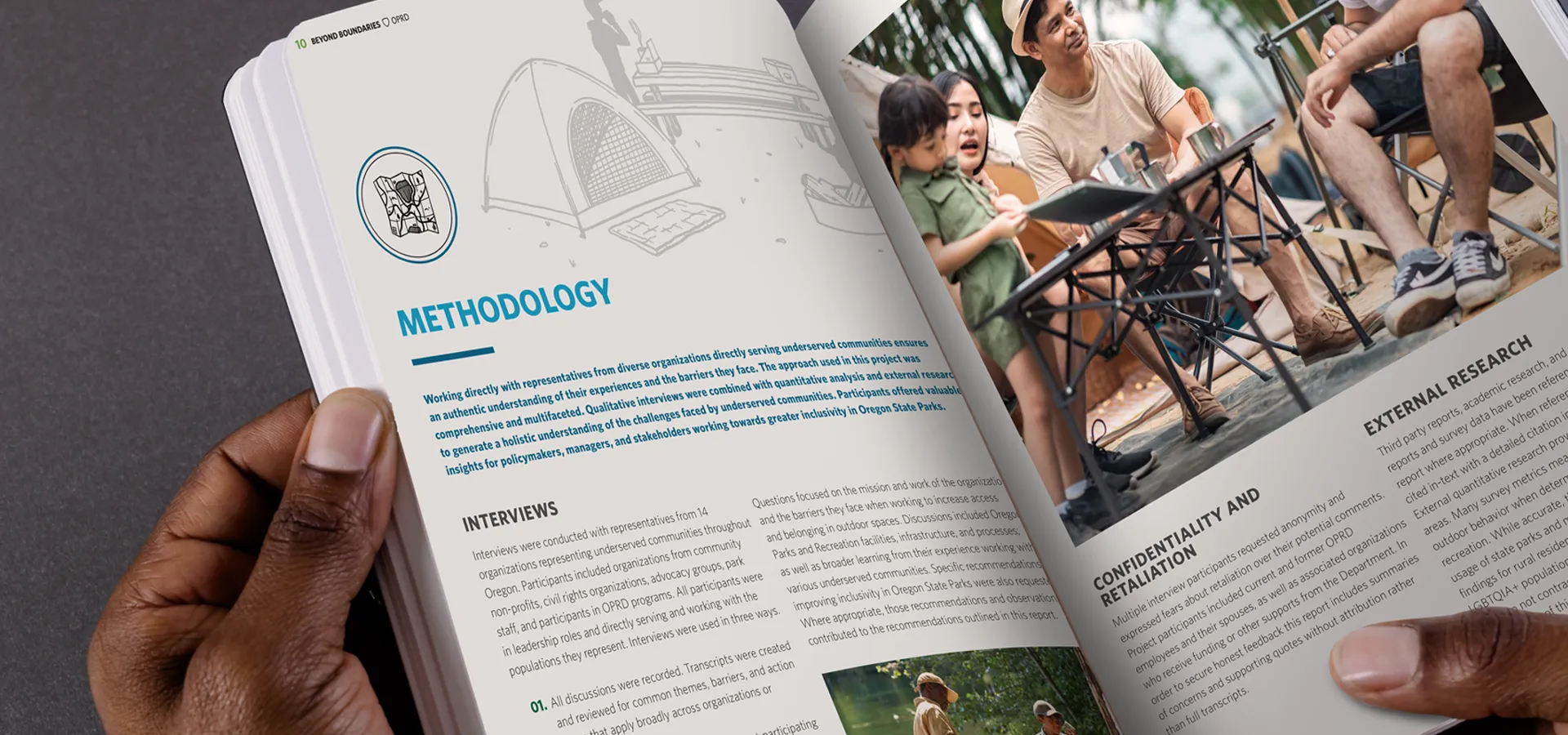
Whenever possible, meetings were held face-to-face with organizations and representatives across the state. When in-person sessions were not feasible, discussions were conducted remotely. In every case, participants were given a clear explanation of the project, the purpose of the conversation, and how their input would inform the final recommendations. That clarity helped create the conditions for stronger participation and more honest dialogue.
Just as important, RDG chose not to collapse multiple constituencies into broad, catch-all focus groups. That decision was deliberate. Too much equity work treats communities as interchangeable, flattening distinct identities and experiences into generic categories that obscure more than they reveal. RDG recognized that if the work was going to be credible, each group needed space to speak for itself, in its own terms, about the specific conditions shaping access. Participants included representatives from BIPOC communities, immigrant communities, LGBTQ communities, disabled communities, neurodivergent communities, low-income Oregonians, outdoors organizations, and parents of disabled youth, among others.
Each meeting began with a consistent set of core questions to preserve rigor across the process, while leaving room to follow the most important threads within each discussion. That balance of structure and flexibility made it possible to gather comparable information across a wide range of participants without reducing their experiences to a reformatted framework.
All conversations were transcribed and analyzed in depth. RDG reviewed the material qualitatively and used thematic and keyword analysis to identify patterns across interviews. That made it possible to examine the findings on two levels: first, by understanding the distinct experience of each community, and second, by identifying the recurring issues that cut across groups.
That second level of analysis became one of the most important contributions of the work. Many barriers that initially appeared isolated turned out to reflect shared root causes. Challenges often understood as cultural or demographic were also shaped by transportation, economic constraints, unfamiliarity, intimidation, and prior experiences that affected whether park spaces felt welcoming and accessible. By separating symptoms from causes, RDG helped the agency see where intervention could have the broadest impact.




 // Government + Public Sector